

In our previous article, “What Is an RC Car ESC?”, we introduced the basic concepts and common types of electronic speed controllers (ESCs) for RC cars. So, with the dazzling array of products on the market, how do we choose the most suitable ESC for our RC car?
This article will provide a clear and practical buying guide from two aspects: purchasing needs and evaluating core technical parameters.
Clarify Your Needs
Before purchasing, you should clarify the proportion of the car model you need to match, the type of motor, and the intended use.
Determine the Motor Type
The key principle when choosing an ESC is to match it correctly with the motor.
Brushless ESC: Designed exclusively for brushless motors.
Brushed ESC: Designed exclusively for brushed motors.The two cannot be used interchangeably.
Compatible Car Models and Intended Use
Recreational Players: If your RC car is mainly used for daily leisure and entertainment, and you don’t have high requirements for speed and control precision, a brushed RC car ESC will meet your needs.
For racing enthusiasts: If your vehicle is intended for professional racing or track competitions and you have a sufficient budget, you must choose a brushless RC car ESC with faster response, higher operating efficiency, and support for high-rate discharge.
ESC Manufacturing Quality and Durability
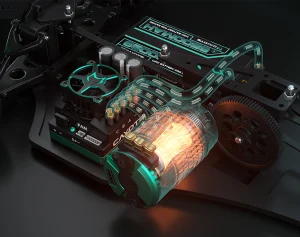
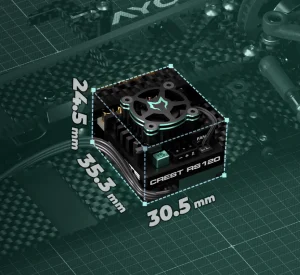
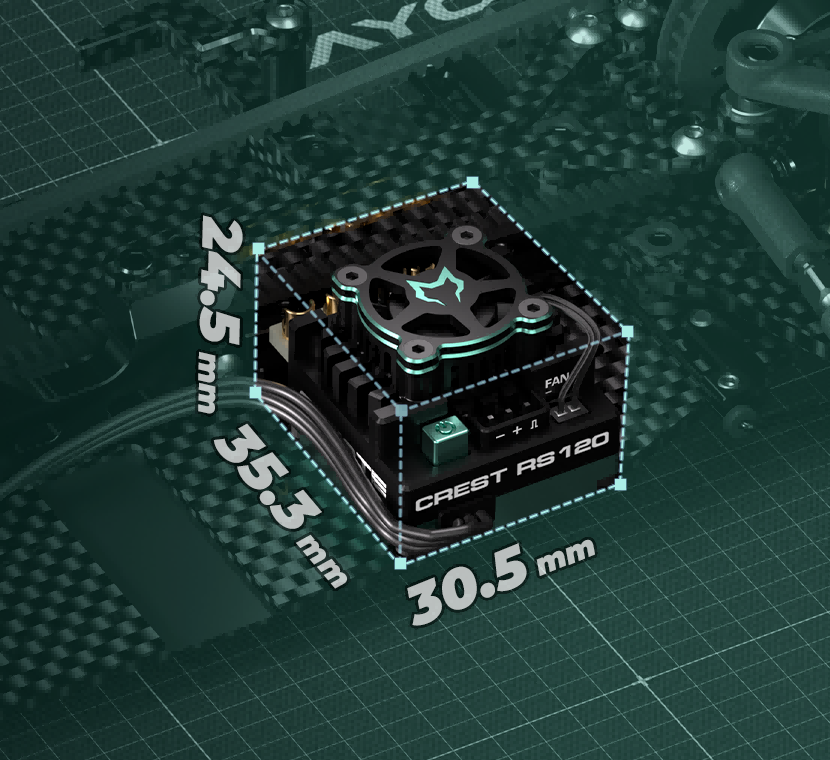
For racing RC cars, choose an ESC with a unibody aluminum alloy heatsink, a high-power version, and a built-in intelligent cooling fan to ensure stable output under high loads. The Crest RS120 sensored brushless ESC is a 1/10 scale racing RC car ESC equipped with a high-speed fan. Superior cooling technology ensures its high efficiency.
For off-road vehicles, crawlers, or monster trucks, it is recommended to prioritize ESCs with IP67 fully sealed dust and water resistance to withstand harsh outdoor environments.
Programmability
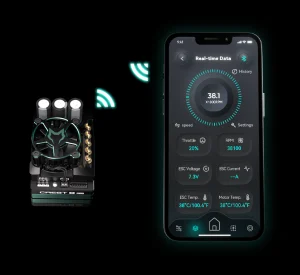
For racing RC cars, a programmable ESC is essential. You can adjust parameters such as throttle response curves and braking force using a compatible programming box, mobile app, or computer to match different racing tracks and help you perform at your best in races.
For recreational enthusiasts: If you want to explore and develop more RC car fun, improve handling, and have a sufficient budget, you can also consider programmable RC car ESCs.
What Technical Parameters Should You Consider When Choosing an RC Car ESC?
Besides considering compatibility and your needs, the following technical parameters are essential to consider before purchasing. They directly determine whether the ESC can operate safely and stably.
Current Rating
The ESC’s current capacity must be greater than or equal to the motor’s current rating. It is recommended to ensure that the ESC’s continuous and peak current ratings are approximately 20% to 30% higher. This ensures a stable power supply while providing a safety margin to prevent overcurrent damage under full load.
Voltage Range and Battery Compatibility
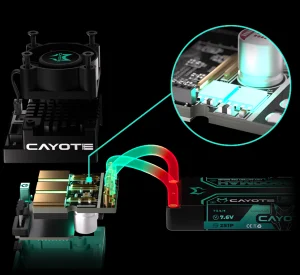
The ESC’s voltage support range must cover the voltage of your battery. This is because the ESC directly receives and switches the battery pack voltage to control the motor power. The battery’s rated voltage must never exceed the ESC’s input rated voltage; otherwise, the ESC components may overheat and be damaged. Remote control car ESCs usually clearly indicate the number of supported batteries.
BEC Specification
The BEC specification directly determines whether the receiver and steering servo can receive stable, matched, and sufficient power.
Voltage Matching: Ensure the BEC’s output voltage matches the withstand voltage of your receiver and high-voltage servo motor.
Sufficient Current: The BEC’s output current must meet the servo motor’s power consumption requirements. High-torque servos or crawler servos consume a great deal of power when fully extended; insufficient BEC current can cause the receiver to lose power and disconnect due to insufficient supply.
In short, before purchasing an RC car ESC, you should fully understand your application scenario, budget, and various technical parameters to easily select the most suitable ESC for your vehicle. Hopefully, this guide will provide effective assistance in your ESC selection!