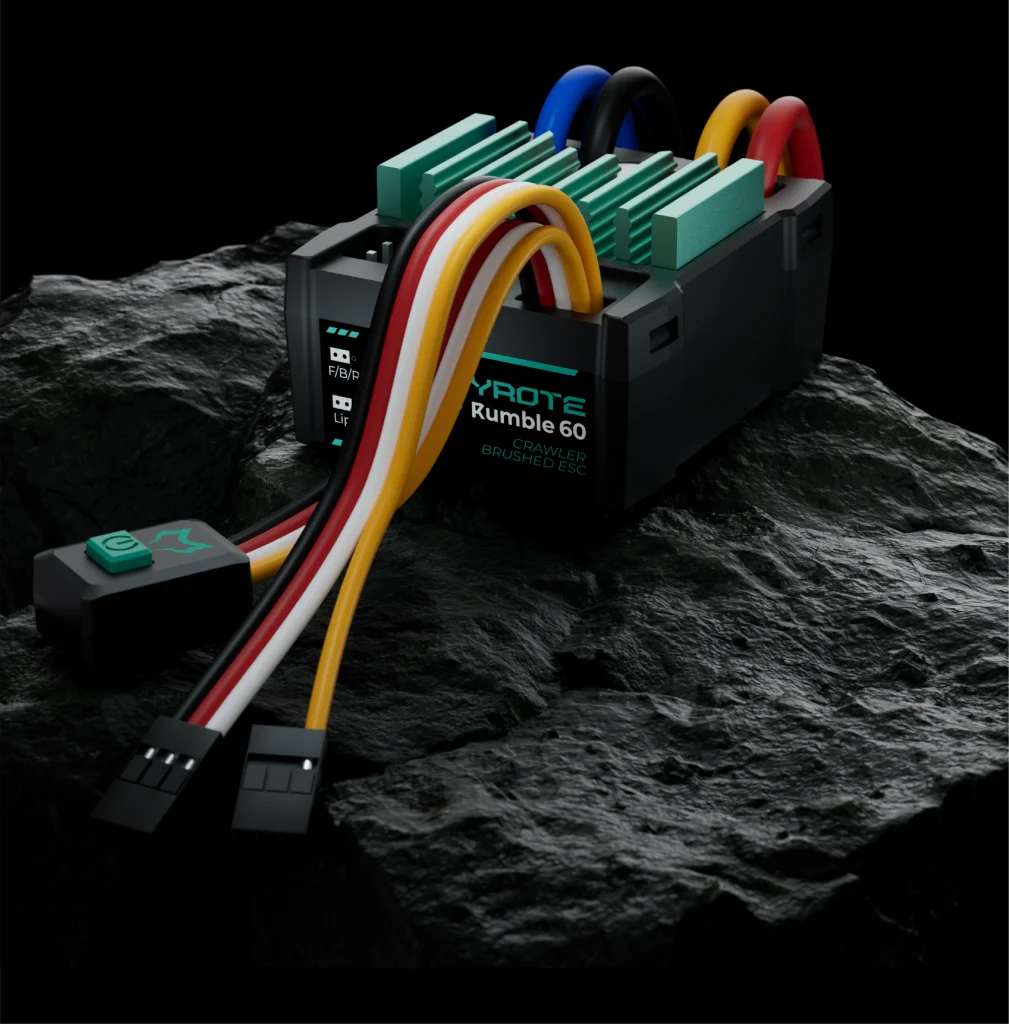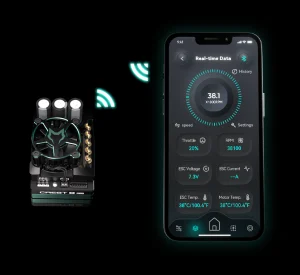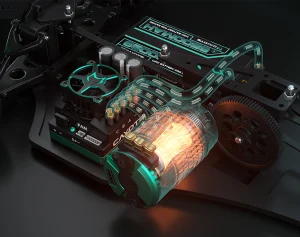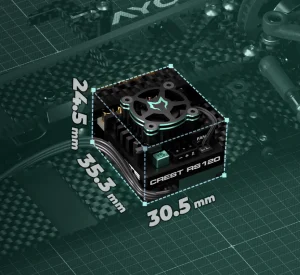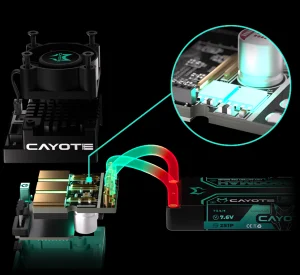


ESC stands for electronic speed controller; it is a core component of an rc car power system. It is primarily used to control the speed, direction, and braking of the RC car’s motor. It is composed of electronic components such as a microcontroller (MCU), gate drivers, MOSFET transistors, a Battery Eliminator Circuit (BEC), and capacitors.
How Does an RC Car Electronic Speed Controller Work?
Its operation works as follows: when the receiver transmits throttle commands from the remote controller to the ESC, the MCU reads and interprets the instructions. It then controls the high-speed switching of the MOSFETs via the gate drivers, thereby regulating the electrical energy delivered from the battery to the motor to control motor speed, direction, and braking.
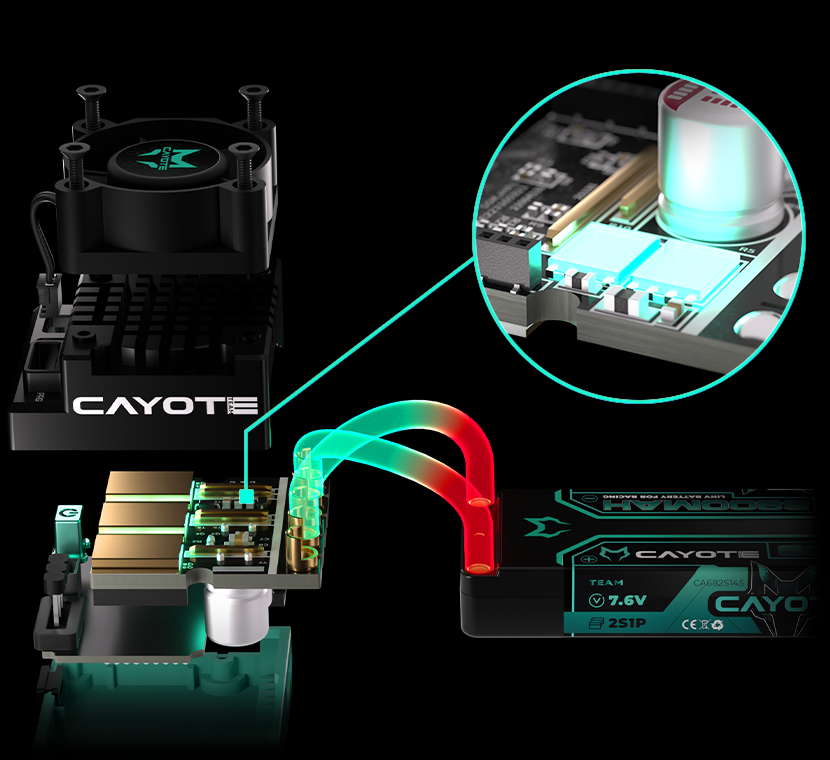
A higher throttle input results in a longer MOSFET “on” time, meaning the motor receives more electrical energy and spins faster; conversely, lower input results in slower speeds. Meanwhile, capacitors stabilize the power supply, and the BEC provides the necessary low-voltage power for electronic devices such as the receiver and servos.
Why is the Electronic Speed Controller Important for RC Cars?
The electronic speed controller is not only the power control center of an RC car but also a key factor determining the driving experience. From precise throttle response to unleashing maximum speed, its core role is evident in the following areas:
Precise Response to Remote Control Commands
The electronic speed controller rapidly recognizes throttle, brake, and steering commands from the remote controller. It accurately translates them into motor actions, allowing the RC car to respond smoothly and promptly to inputs.
Determines the RC Car Operating Speed
By regulating the electrical energy delivered to the motor, the ESC controls motor speed and power output, thereby influencing the car’s acceleration and power response.
For competitive RC racing, precise and stable power output is crucial, as even subtle differences in throttle response can affect vehicle handling and speed performance.
Provides Protective Functions
RC Car ESCs feature auxiliary functions such as overheat protection, overcurrent protection, and low-voltage protection. In abnormal situations, the ESC can reduce output or cease operation entirely to protect the motor, the battery, and the ESC itself.
What are the Different Types of RC Car ESCs?
RC car ESCs are primarily classified in two ways: by the type of motor they support and by their sensing method.
By Motor Type
RC car ESCs can be classified into brushed and brushless types based on the motor they are designed to drive.
Brushed RC Car ESC
RC car brushed ESCs are specifically designed for brushed motors; they feature two power wires (positive and negative) and rely on mechanical commutation to switch the current. It offers advantages such as relatively simple circuit design and low manufacturing costs. It is widely used in entry-level or RTR (Ready-to-Run) RC cars.
However, it is worth noting that the internal brushes are subject to wear, resulting in lower efficiency (70–80%) and higher long-term maintenance costs.
RC Car Brushless ESC
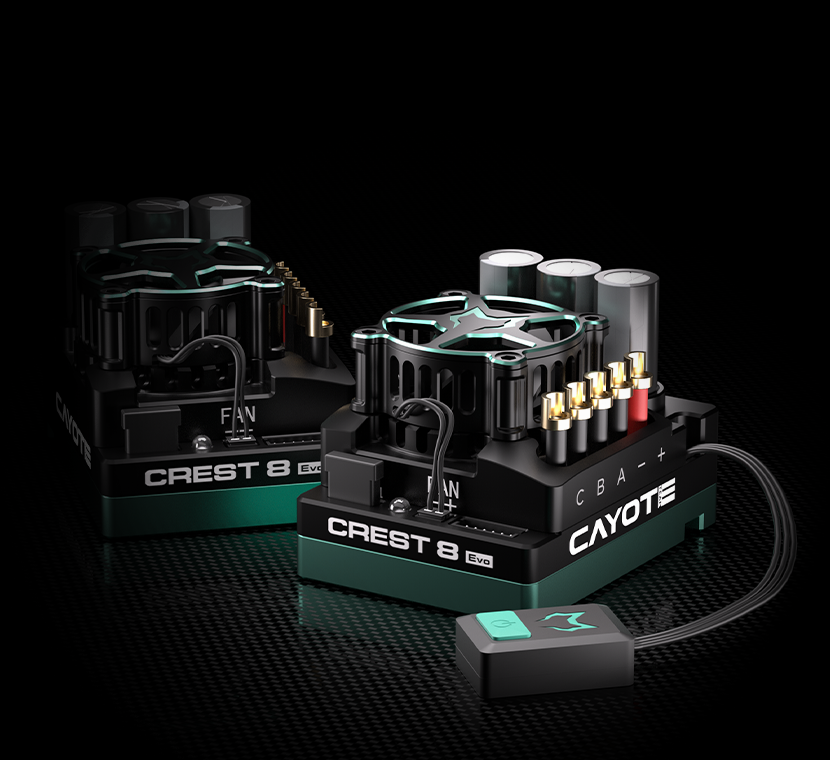
Brushless ESCs feature three main power wires (phases A, B, and C) to connect to brushless motors and utilize electronic commutation. They offer advantages such as high operating efficiency (92–96%), long service life, and maintenance-free operation. However, their design is relatively complex, and the purchase cost is higher; they are predominantly used in racing RC cars.
Classification by Sensor Type
Furthermore, brushless ESCs can be categorized into sensored and sensorless types based on whether they support Hall sensor interfaces and wiring harnesses.
Sensored Brushless ESC
RC car sensored brushless ESCs typically include an internal Hall sensor wiring harness and are designed to work with sensored brushless motors equipped with position sensors (usually Hall-effect sensors). By using sensors to detect rotor position, they provide smooth startup, superior low-speed control, and more precise throttle response.
However, the inclusion of additional sensor components results in higher costs. They are ideally suited for drag racing applications.
Sensorless Brushless ESC
These units lack sensor wiring harnesses and determine motor position by detecting electrical signals, such as back-electromotive force (Back-EMF). They are generally easier to install and maintain but offer inferior throttle response and are prone to stuttering or cogging.
A thorough understanding of the working principles and classifications of RC car ESCs helps you master RC power systems, enabling you to make informed decisions when upgrading or purchasing components.
CAYOTE specializes in the R&D and manufacturing of RC car ESCs, motors, batteries, and other power system components. If you are looking for a stable and reliable supplier of RC power systems, please feel free to contact us.